Diagnosis
Are these actually fungus gnats?
Written by Mustafa Ayan Fact-checked against university extension/IPM sources Last reviewed: September 19, 2026
Fungus gnats are slender, dark, mosquito-like flies that hover over houseplant soil. They are weak fliers. Fruit flies prefer kitchens. Drain flies look moth-like and sit on porcelain. Springtails aren't flies at all — they jump, not fly. Treating the wrong pest won't solve the underlying problem.
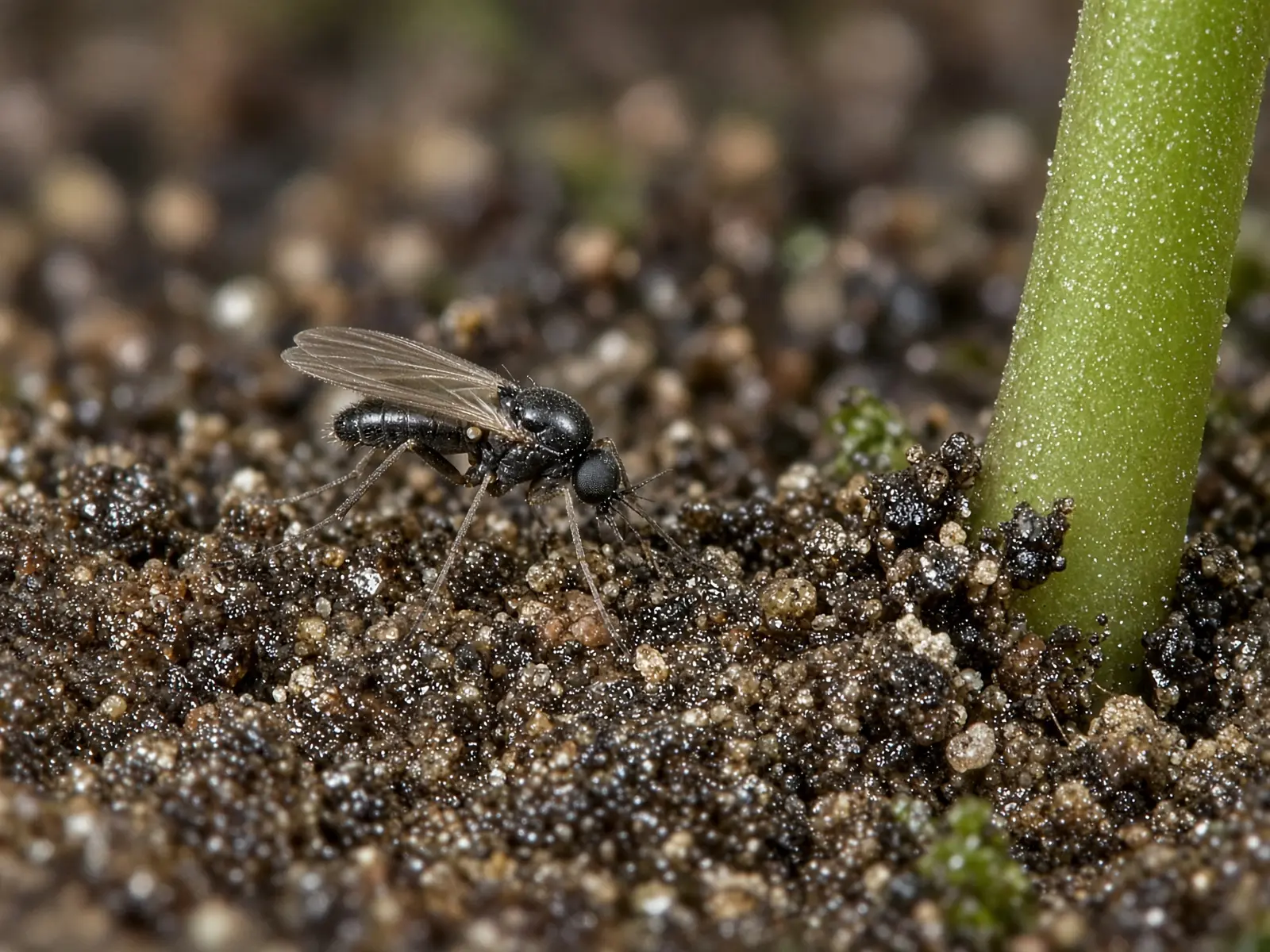
- Fungus gnats Usually moist soil, sometimes other damp sites — long legs, fly up when you water.
- Fruit flies Fruit, trash, compost — rounder body, red eyes.
- Drain flies Drains, fuzzy wings — hop more than they fly.
- Springtails Wet soil surface — no wings, they jump instead of fly.
Where do you see them most?
Four quick questions
Full comparison: appearance, behavior, and breeding site
Where an insect keeps returning to is usually the fastest, most reliable clue — more reliable than color or size alone, which can be hard to judge on something this small.
| Pest | Appearance | Behavior | Breeds in |
|---|---|---|---|
| Fungus gnats | Slender, dark gray to black, mosquito-like silhouette with long legs and a single pair of clear wings. | Weak, wandering fliers. Rest on soil, pot rims, or nearby walls; lift off when a pot is watered. | Usually moist potting soil; can also occur in other damp organic sites |
| Fruit flies | Small, tan to brown, with a rounder body and noticeably red eyes. | Strong, darting fliers. Found around ripening produce or anywhere fermenting residue collects. | Commonly fruit, trash, and fermenting organic material |
| Drain flies (moth flies) | Small and fuzzy with broad, moth-like wings held in a tent shape at rest. | Weak, short hopping flights. Rest on walls and fixtures near sinks, showers, or floor drains. | Commonly drains and organic buildup in drain traps |
| Springtails | Tiny (under 1/8 in), wingless, gray to white. Not a fly at all — a distinct group of soil arthropods. | Don't fly. Jump or spring when disturbed. Often seen clustered on very wet soil surfaces or floating in a saucer. | Overly wet, organic-rich soil or decaying plant matter |
Adult appearance vs. larval appearance
Adults are what you notice; larvae are what actually matters for treatment. They look nothing alike.
Adults
Slender, dark gray to black, mosquito-like, with long legs and a single pair of clear wings — up to about 1/8 inch long. Weak, wandering fliers that lift off soil when disturbed or watered, rather than darting toward food like a fruit fly.
Larvae
Legless, translucent to whitish, worm-like, with a distinct shiny black head capsule — up to about 1/4 inch. Live in the top inch or two of moist mix, not on the surface. Full identification detail: how to identify fungus gnat larvae.
Confirmation clues, if you're still not sure
- Wiggle a pot. If small flies lift off the soil surface when you disturb or water a houseplant, that points strongly to fungus gnats.
- Potato test. Bury a half-inch cube of raw potato just under the soil surface and check the underside after 1–2 days — fungus gnat larvae are drawn to it and should be visible if present.
- Check the drain, not the plant. Run a finger around the inside rim of a floor or sink drain — a slimy film is drain fly breeding material, unrelated to any nearby plants.
- Tap the soil surface. Springtails cluster and visibly jump when disturbed rather than taking flight — a fungus gnat will fly, a springtail will hop.
When it's reasonable not to treat yet
Not every sighting needs an immediate treatment plan. It's reasonable to just monitor, rather than start drenching or trapping, if:
- You've seen a single insect once, with no repeat sightings over the following days.
- The soil surface of nearby plants is already dry and drains well — there's no obvious moist breeding site for it to have come from.
- You're not yet sure which pest it is — treating fruit flies with a soil drench, or fungus gnats with a fruit trap, wastes effort on the wrong target.
In these cases, a reasonable first step is simply placing a yellow sticky trap to monitor for a few days before doing anything else — it tells you whether this is an isolated insect or the start of a real infestation.
What to do next
Fungus gnats
Confirmed by soil, weak flight, and long legs.
Start the elimination guide
Fruit flies
Confirmed by kitchen location and darting flight toward produce.
Fruit fly control tips
Drain flies
Confirmed by drain location and moth-like resting posture.
Drain fly control tips
Springtails
Confirmed by jumping (not flying) and no wings at all.
Springtail control tips