Let the soil dry to stop fungus gnats
Written by Mustafa Ayan Fact-checked against university extension/IPM sources Last reviewed: September 19, 2026
Wet mix is the nursery. Here is how dry the top should be, how to water without restarting the infestation, and what to do with plants that hate drought.
Why this is the real fix
Adult fungus gnats do not live long. They need moist, organic mix to lay eggs. If the surface stays wet, a new generation appears every two to three weeks. Traps and sprays only buy time unless you break that moisture cycle.
The general principle is to allow the growing medium to dry as far as the plant safely tolerates — not the same fixed depth for every pot. For many established houseplants in ordinary potting mix, that works out to roughly the top 1 to 2 inches before watering again, checked by a finger test, not a calendar. But how dry is safe depends entirely on the plant: a moisture-loving tropical, a succulent, an orchid in bark, a seedling, a fresh cutting, and an edible herb each tolerate a different amount of drying, covered below. If you're not sure which category a plant falls into, err toward less aggressive drying and watch the plant's own response.
How to water without feeding gnats
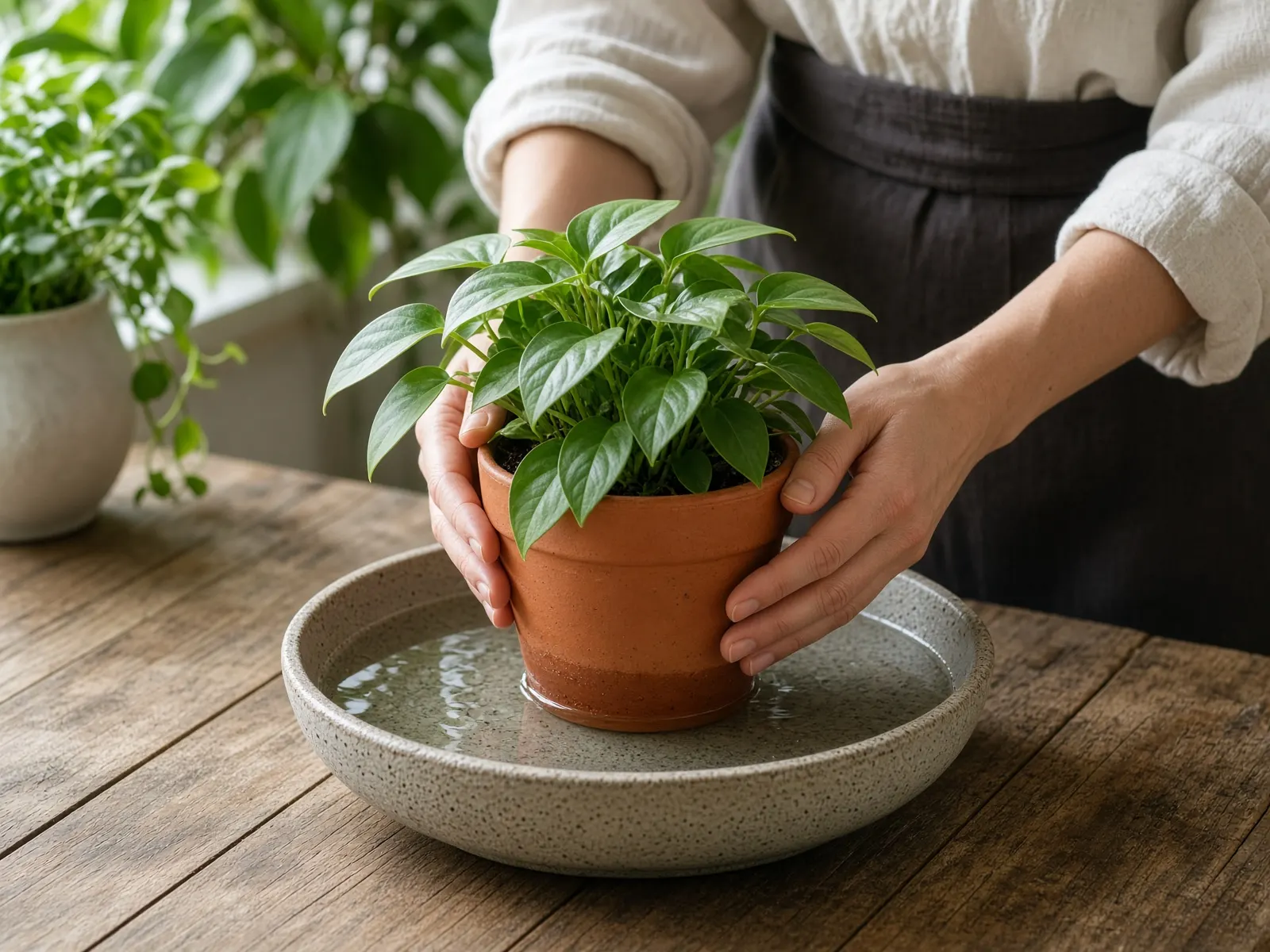
Bottom-water: set the pot in a tray of water for 10–20 minutes, then dump what is left. Roots drink from below; the surface stays drier and less attractive to egg-laying females.
If you water from above, water slowly until a little drains, then empty the saucer. Never leave a pot sitting in a full cachepot.
Plants that cannot go bone-dry
Ferns, calatheas, and some tropicals wilt if the whole pot dries. You can still dry the surface: water less often, switch to a chunkier mix, and top-dress with sand so the top layer dries even when the root zone stays evenly moist.
Succulents, cacti, and orchids
These aren't usually where a heavy infestation starts — they're already grown in fast-draining mix and watered infrequently, which is inhospitable to fungus gnats in the first place. If you do see gnats around a succulent or cactus, the mix is likely staying wetter than it should for that plant; fix the mix (more grit, a terracotta pot, less frequent watering) rather than adding a liquid larval drench, since repeated moisture is a bigger risk to these plants than to a moisture-tolerant tropical.
Orchids in bark mix behave differently from soil-grown plants: bark dries fast and unevenly, so the finger test can be misleading. Check moisture by weight (a dry pot is noticeably lighter) rather than by feel at the surface.
Seedlings, cuttings, and edibles
Seedlings and fresh cuttings are the opposite problem: their small root systems can't tolerate the mix drying as aggressively as an established houseplant, so "let it dry" needs to be gentler here — dry the very top surface layer only, not a full 1–2 inches, and lean on a sticky trap and good airflow rather than an aggressive drought. A thin layer of sand or vermiculite on the surface can help keep the top dry without drying the root zone a seedling depends on.
Edible herbs and vegetables in containers are usually treated like any other houseplant for this purpose — dry the top layer between waterings — but avoid soil drenches close to harvest, and always follow the label on any product used near food crops.