Mosquito Bits (Bti) for fungus gnats
Written by Mustafa Ayan Fact-checked against university extension/IPM sources Last reviewed: September 19, 2026
How to use Bacillus thuringiensis israelensis — Mosquito Bits or Gnatrol — as a soil treatment that targets fungus gnat larvae. Follow the current product label for application and safety precautions.
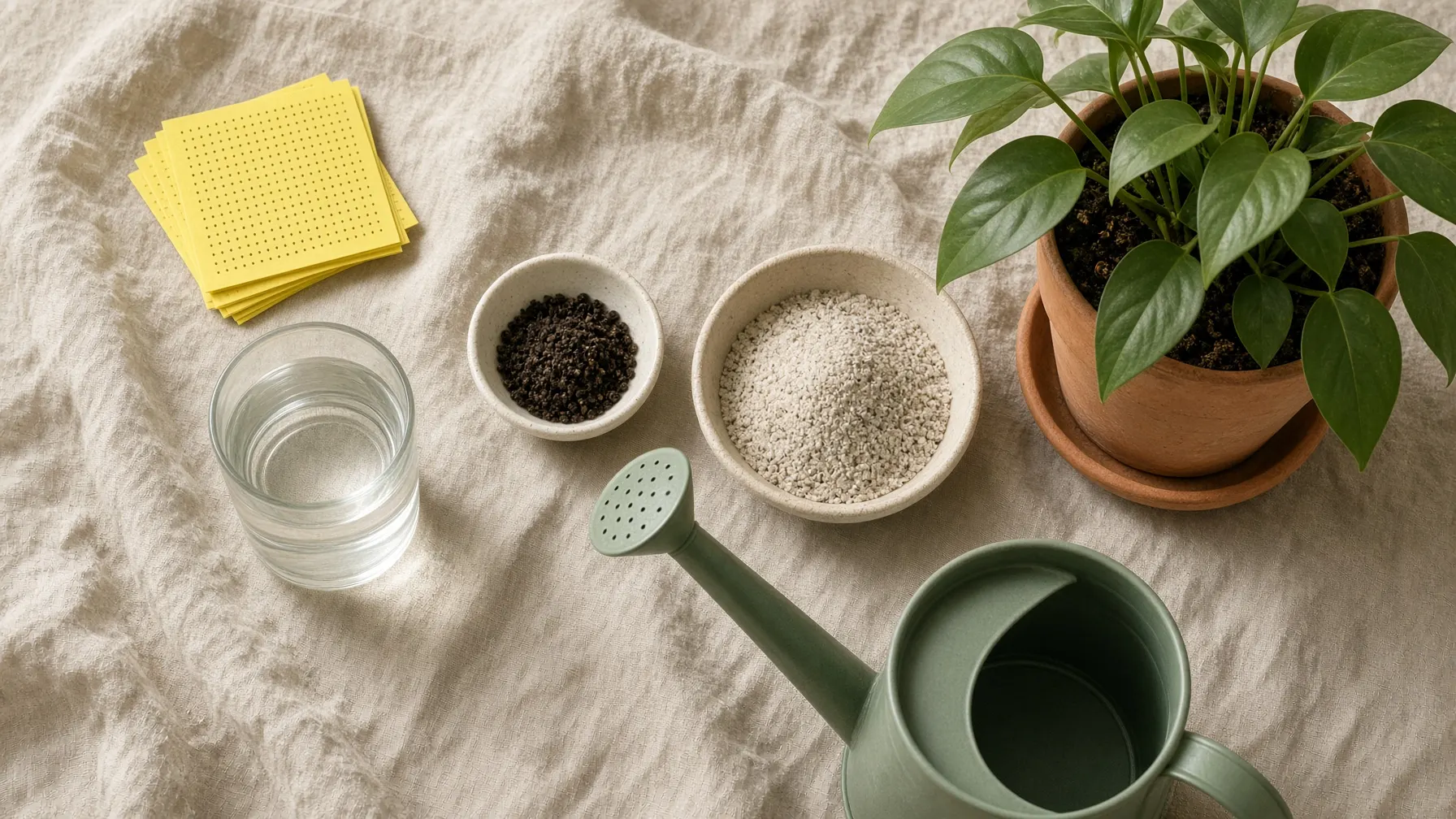
What Bti is
Bacillus thuringiensis subspecies israelensis is a naturally occurring bacteria. It produces a toxin that affects the gut of certain fly larvae, including fungus gnats and mosquitoes. It does not work on adult gnats, and products labeled only for caterpillars (a different Bt strain) will not help.
How to use it on houseplants
Bti products are generally applied either sprinkled on the soil surface and watered in, or pre-mixed with water and applied as a drench. Follow the current label for the exact amount, preparation method, application site, and retreatment interval — directions vary by product and jurisdiction, and there is no single generic recipe that's correct across brands.
Bti does not persist forever indoors, which is why labels typically call for reapplication on a schedule — follow what the label says, and use whether you're still seeing adults on traps as a guide to whether to continue past that. Treat each application as that pot's scheduled watering, not an addition to it, so the dry-top habit stays intact between rounds.
Safety
Bti is a narrow-spectrum bacterium — it's used in organic growing operations because it targets specific fly larvae rather than a broad range of organisms. That's a different claim from "safe for everything, no precautions needed." For handling, storage, and any precautions around children, pets, or edible plants, follow the current product label rather than a general statement here, since specifics can vary by product and formulation.
Where Bti fits in the overall plan
Dry soil stops new eggs. Traps catch adults. Bti kills the larvae already in the pot. Together they cover the life cycle. Beneficial nematodes (Steinernema feltiae) are another strong larval option if Bti is hard to find where you live — but they're a living product, not a shelf-stable one. They need to arrive cold, be applied within days, and kept in consistently moist soil to survive, which makes them a better fit for someone who can apply them right away than a backup sitting in a cabinet.